

Copper Flotation: Recovering Chalcopyrite and Chalcocite
Key takeaways
- Copper flotation targets sulphide minerals — mainly chalcopyrite and chalcocite.
- Grind size is the first lever. Coarse enough to avoid slimes, fine enough to liberate.
- Reagent choice controls selectivity, especially where pyrite competes with copper minerals.
- Rougher, cleaner and scavenger stages balance recovery against concentrate grade.
- Recovery is worth more than grade in most copper circuits, because the tailing is a permanent loss.
Froth flotation is the foundation of the copper industry. It takes ore grading a fraction of a percent copper and produces a concentrate grading twenty to thirty percent — a hundredfold upgrade that makes the rest of the process commercially possible.
Getting that upgrade to work well depends on a small number of variables, applied consistently.
What floats, and what does not
Copper sulphide minerals — chalcopyrite, chalcocite, bornite and covellite — all respond well to flotation when a suitable collecting agent is present. Their surfaces become hydrophobic, they attach to rising air bubbles, and they report to the froth.
The complication is pyrite. Iron sulphide is common in copper deposits and, unfortunately, also floats readily. Left uncontrolled, it dilutes the concentrate and reduces its grade, which increases smelting cost and freight. Much of copper flotation circuit design is really about separating copper sulphides from pyrite.
The main control variables
| Variable | Effect | Typical problem if wrong |
|---|---|---|
| Grind size | Determines liberation of copper minerals | Too coarse: locked copper lost. Too fine: slimes destabilise froth |
| pH | Controls pyrite depression and collector action | Wrong pH: pyrite floats, grade falls |
| Collecting agent | Selects copper sulphides for flotation | Under-dosed: low recovery. Over-dosed: poor selectivity |
| Frother | Stabilises froth for efficient transfer | Unstable froth: minerals drop back into the pulp |
| Pulp density | Affects flotation time and reagent concentration | Too thick or thin: poor recovery and grade |
| Residence time | Allows slow-floating particles to report | Too short: copper lost to scavenger tailing |
Grind size
Copper sulphides need to be liberated from the gangue before they can be floated efficiently. Too coarse and composite particles report to the tailing regardless of their copper content; too fine and slimes destabilise the froth and carry gangue into the concentrate. The target comes from test work and depends on the grain size of the copper minerals in your ore. Where slimes cannot be avoided, they are usually removed by desliming ahead of flotation, because fine material consumes reagent, floats slowly and carries gangue into the concentrate.

pH and the pyrite problem
Lime is added to raise pH — typically to between about 10.5 and 12 — which depresses pyrite while allowing copper sulphides to float. Control of pH is therefore the main tool for selectivity in copper circuits. Too low and pyrite reports to the concentrate; too high and copper recovery may suffer as collector action is affected.
Reagents
Copper circuits typically use a collector such as a xanthate or a dithiophosphate, with a frother to stabilise the froth. Where pyrite is a problem, additional depressants or careful pH control keep it out of the concentrate. Reagent selection should come from laboratory test work on the actual ore, because mineralogy varies substantially between deposits.
Circuit arrangement
Copper flotation circuits normally run in three stages. Rougher cells make a high-recovery concentrate, accepting a lower grade to capture as much copper as possible. Cleaner cells upgrade that concentrate to saleable grade, returning intermediate middlings back into the circuit for re-treatment. Scavenger cells re-float the rougher tailing to recover slow-floating copper minerals.
The balance between recovery and grade is a genuine trade-off, and circuits are tuned to the plant’s economics. Concentrate that is too low-grade attracts smelter penalties, while pushing grade too hard risks losing copper to the tailing — and unlike middlings, tailing is never re-treated.
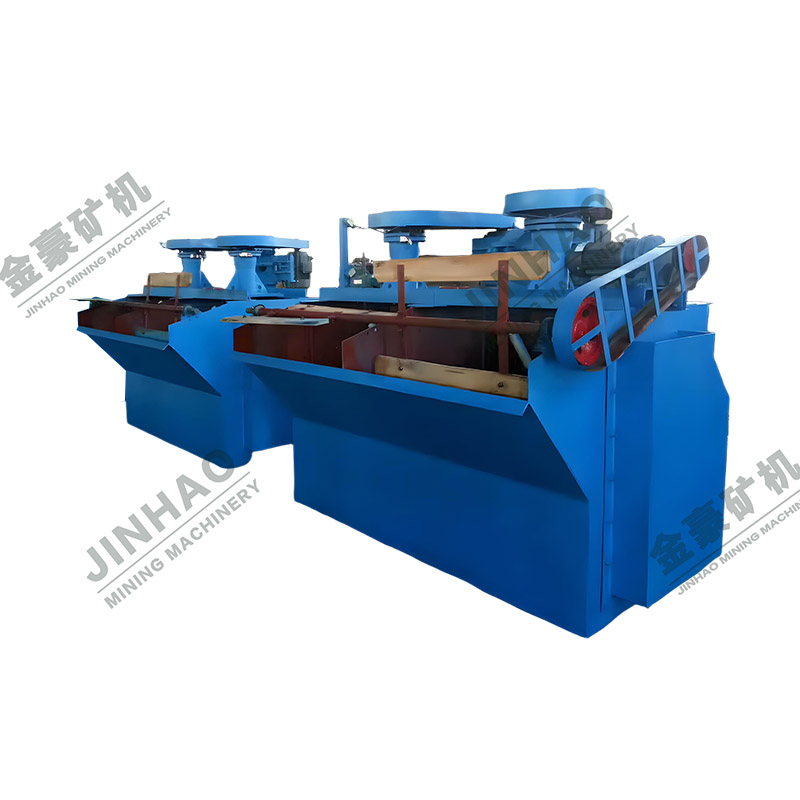
You can review the equipment options in our flotation equipment range, including BF and combined flotation units.
Grinding circuit effects on flotation
Flotation performance is strongly influenced by the grinding circuit upstream. Over-grinding produces slimes that float poorly and destabilise froth; under-grinding leaves copper locked in coarse particles. A Hydrocyclone in close circuit with the mill gives the size control that flotation needs, because it returns oversize rather than letting it pass through.
Regrinding is also common where middlings contain composite particles. Re-grinding those streams liberates the remaining copper and improves concentrate grade without grinding the entire ore stream finer.
Rule of thumb: in copper flotation, protect recovery first. Grade can be improved by cleaner stages and regrinding, but copper that reaches the tailing is gone permanently.
Frequently asked questions
What minerals are recovered by copper flotation?
Mainly the copper sulphides — chalcopyrite, chalcocite, bornite and covellite. Oxide copper minerals such as malachite and azurite do not respond well to conventional sulphide flotation and are usually treated by leaching instead.
Why is pyrite a problem in copper flotation?
Because pyrite is an iron sulphide that floats readily, so it reports to the concentrate and dilutes the copper grade. Higher-grade penalties follow at the smelter. Controlling pH with lime and using suitable depressants keeps pyrite out of the concentrate.
What grind size is needed for copper flotation?
Fine enough to liberate the copper sulphide grains from gangue, but coarse enough to avoid producing excessive slimes. The specific target comes from laboratory test work and depends on the grain size of the copper minerals in the ore.
What do rougher, cleaner and scavenger cells do?
Rougher cells make the initial concentrate at high recovery. Cleaner cells upgrade it to saleable grade and return middlings for re-treatment. Scavenger cells re-float the rougher tailing to recover slow-floating copper that would otherwise be lost.
Should I optimise for grade or recovery?
In most copper circuits, recovery is protected first. Concentrate grade can be improved by adding cleaner stages or regrinding, but copper that reports to the tailing is permanently lost. The optimum balance depends on smelter terms and freight cost.
Designing a copper flotation circuit? Send us your mineralogy and flotation test results for a circuit design.
Talk to a Jinhao engineer