
Free-Milling and Oxide Gold Ore: Why It Is Easy to Process
Key takeaways
- “Free-milling” means the gold is accessible. Cyanide can dissolve it directly, with no roasting or pressure oxidation first.
- Oxide ore is the easiest hard-rock ore. Weathering has already broken down the sulphides that normally lock gold in.
- Gravity first, then leach. Catching coarse free gold early is cheap and keeps it out of the leach circuit.
- Recovery above 90% is normal for free-milling oxide ore in a well-run CIL or CIP plant.
- Oxide ore gives way to sulphide ore with depth. Plan for the transition, because the flow sheet usually has to change.
Among hard-rock gold ores, free-milling oxide ore is the one every metallurgist wants. The gold is accessible, the leach works, recovery is high and the flow sheet is simple. Understanding why it behaves so well also explains why refractory ore is so much harder — the two are opposite ends of the same spectrum.
What “free-milling” actually means
A free-milling ore is one in which the gold can be recovered by direct cyanidation, without any pre-treatment. The gold may be fine, but it is physically exposed to the leach solution rather than encapsulated inside a mineral that cyanide cannot penetrate.
Two conditions usually have to be met. First, the gold must be liberated — grinding must have exposed it. Second, the ore must not consume cyanide aggressively. Some minerals, particularly copper sulphides and certain carbonaceous matter, react with cyanide and starve the leach, and those ores are not free-milling even if the gold is exposed.
Why oxide ore is easy
Oxide ore is the weathered zone of a deposit. Near the surface, oxygen, water and biological activity break down sulphide minerals into oxides, hydroxides and clays. Iron sulphides become iron oxides; the rock turns rusty and softens.
That weathering does two useful things. It destroys the sulphide minerals that would otherwise lock gold inside their crystal structure and consume cyanide, and it opens up the rock so the leach solution penetrates more easily. The result is an ore that leaches quickly and at high recovery.
Which process fits oxide gold
| Ore characteristic | Recommended route | Why |
|---|---|---|
| Coarse free gold present | Gravity concentration ahead of leaching | Cheap recovery, avoids over-grinding coarse gold into slimes |
| Fine free gold, low cyanide consumers | CIL or CIP cyanidation | Direct dissolution, high recovery, simple flow sheet |
| Gold with sulphides still present | Flotation, then treat the concentrate | Concentrates the gold and reduces leach volume |
| Low grade, coarse, permeable | Heap leaching | Low capital and operating cost per tonne |
| High clay or slimes content | Agglomeration before heap leach, or agitated leach | Clay blocks percolation in a heap |
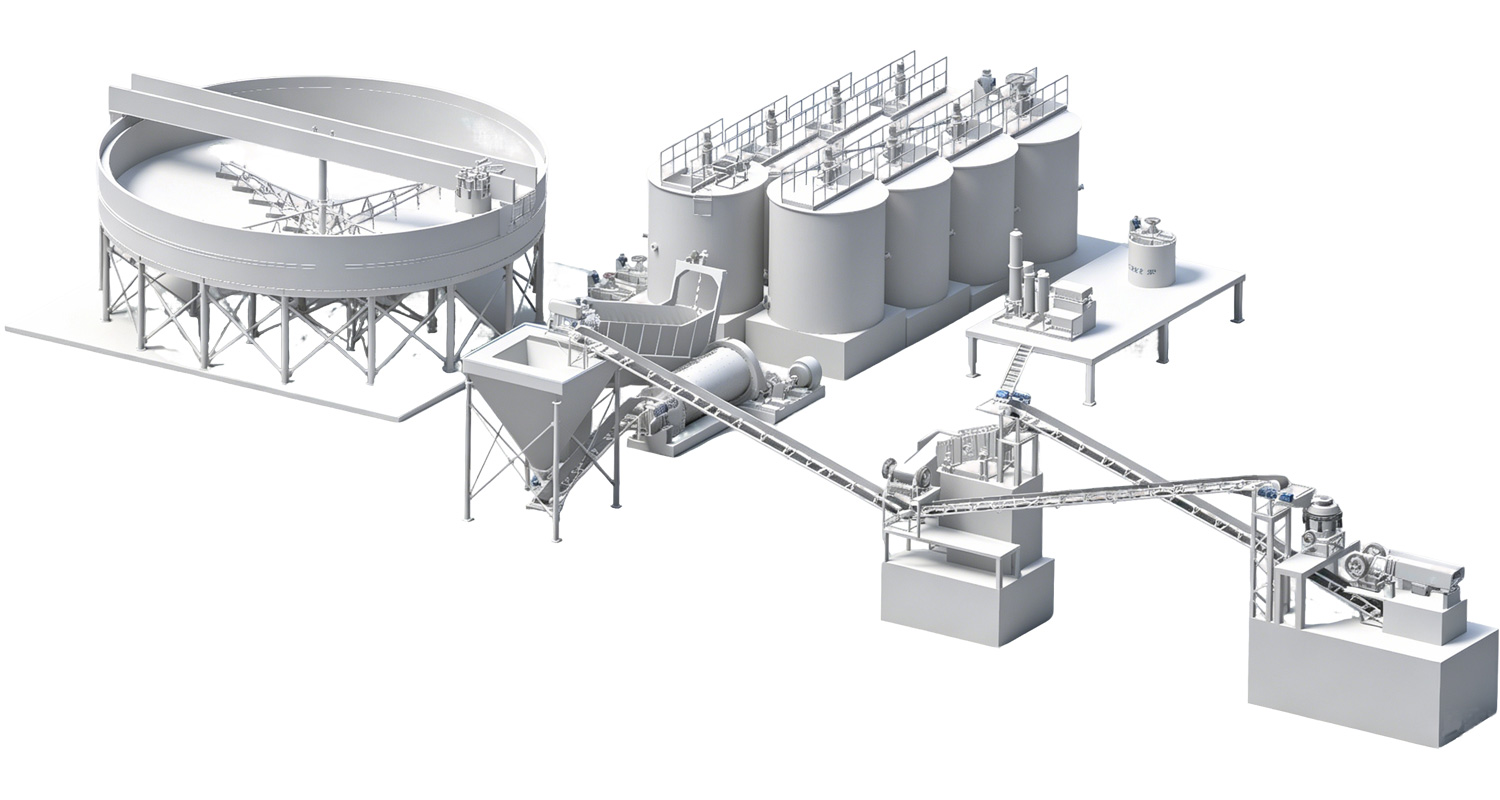
In practice, most free-milling oxide plants combine two of these. A common arrangement is gravity concentration to pull out coarse gold, followed by a CIL circuit to leach the remainder. That combination captures the cheap coarse gold without letting it be ground into slimes that gravity cannot recover and that leach only slowly.
The four stages of an oxide gold plant
Comminution
Crushing and grinding reduce run of mine ore to the fineness of grinding needed for the target liberation degree. Oxide ore is usually softer than sulphide ore, so grinding is often easier and cheaper — but over-grinding still hurts, because slimes are harder to leach and harder to thicken. There is one nuance specific to gold: because cyanide leaching depends on exposed surface area, the usual rule that grinding past liberation wastes energy is weaker for gold than for base metals. Some extra grinding can pay back through faster and more complete leaching.
Gravity concentration
If any meaningful fraction of the gold is coarse and free, a gravity stage pays for itself. Coarse gold recovered by gravity costs a fraction of the same gold recovered through a leach circuit, and it avoids the risk of the gold being smeared or flattened during grinding.
Leaching
Cyanide dissolves the gold into solution in aerated, agitated tanks. In a CIL circuit, activated carbon is present in the leach tanks so that dissolved gold is adsorbed as soon as it forms, which suppresses the re-precipitation losses that can occur in a separate adsorption step. Pulp density, pH, cyanide concentration, dissolved oxygen and residence time are the variables that decide recovery.
Recovery from solution
Loaded carbon is stripped in an elution circuit, and the gold is plated out by electrowinning before smelting to doré. Each step can each lose a small percentage, which is why a plant that leaches at 95% can still pour at 90% overall.
What recovery should you expect
A well-designed and well-operated plant treating free-milling oxide ore typically recovers 90% or more of the gold. If recovery is materially lower, the usual suspects are insufficient grinding (gold not liberated), over-grinding (gold locked in slimes), cyanide consumption by an unexpected mineral, or simply too little residence time.
It is worth testing for all of these early. Our guide to oxidized gold ore processing methods compares the main routes in more detail.
Plan for the transition: oxide ore sits above sulphide ore. As mining goes deeper, the ore becomes harder, less free-milling and possibly refractory. Design your flow sheet with the transition in mind rather than discovering it mid-operation.
Frequently asked questions
What does free-milling gold ore mean?
It means the gold can be recovered by direct cyanidation without pre-treatment. The gold is exposed to the leach solution rather than encapsulated in sulphide minerals, and the ore does not consume excessive cyanide.
Is oxide gold ore always free-milling?
Usually, but not always. Oxide ore is generally free-milling because weathering has destroyed the sulphides. However, ore containing reactive minerals or carbonaceous matter can still consume cyanide and behave poorly.
Why use gravity before cyanidation?
Because coarse gold recovered by gravity costs far less than the same gold recovered through a leach circuit, and because it prevents coarse gold being over-ground into slimes that neither gravity nor leaching handles well.
What recovery can I expect from oxide gold ore?
Free-milling oxide ore in a well-run CIL or CIP plant typically recovers 90% or more. Lower figures usually indicate inadequate liberation, over-grinding, or an unexpected cyanide consumer in the ore.
Does oxide ore need roasting?
No. Roasting is a pre-treatment for refractory sulphide ore, where gold is locked in sulphides. Oxide ore is by definition already oxidized, so it can usually be leached directly.
Have a free-milling oxide deposit? Send us your leach test results and we will size the plant.
Talk to a Jinhao engineer