

Oxidized Gold Ore Processing: 4 Key Extraction Methods, Process Selection & Optimization Guide
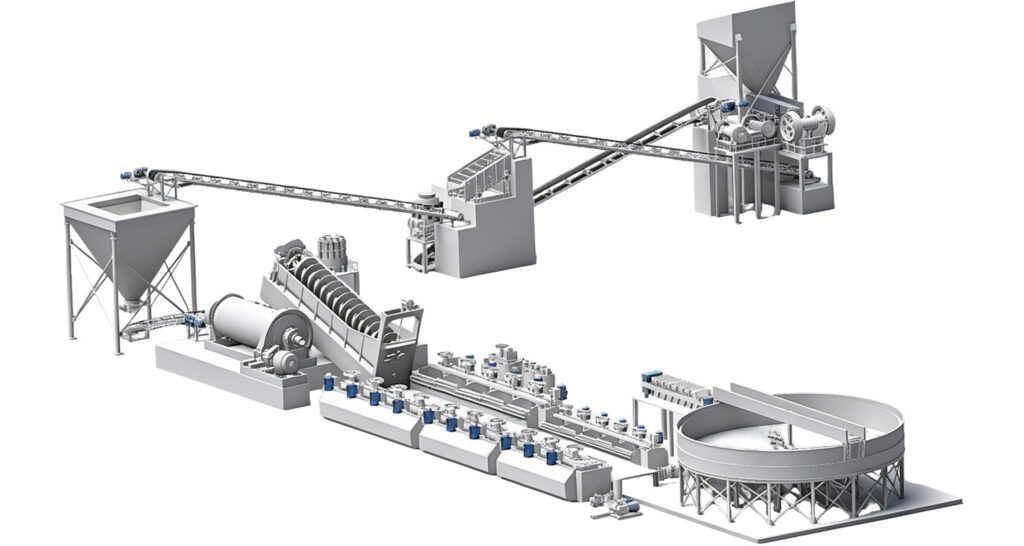
In gold processing, oxidized ores are often described as “easy to treat.”
But in reality, many operations discover that recovery rates are far from ideal once production begins.
The reason is simple: oxidized gold ores are geologically diverse and operationally sensitive. Variations in particle size, clay content, and associated minerals can significantly affect how gold behaves during extraction.
Understanding the right extraction method—and more importantly, when to use it—is critical to achieving stable recovery and economic efficiency.
What Is Oxidized Gold Ore?
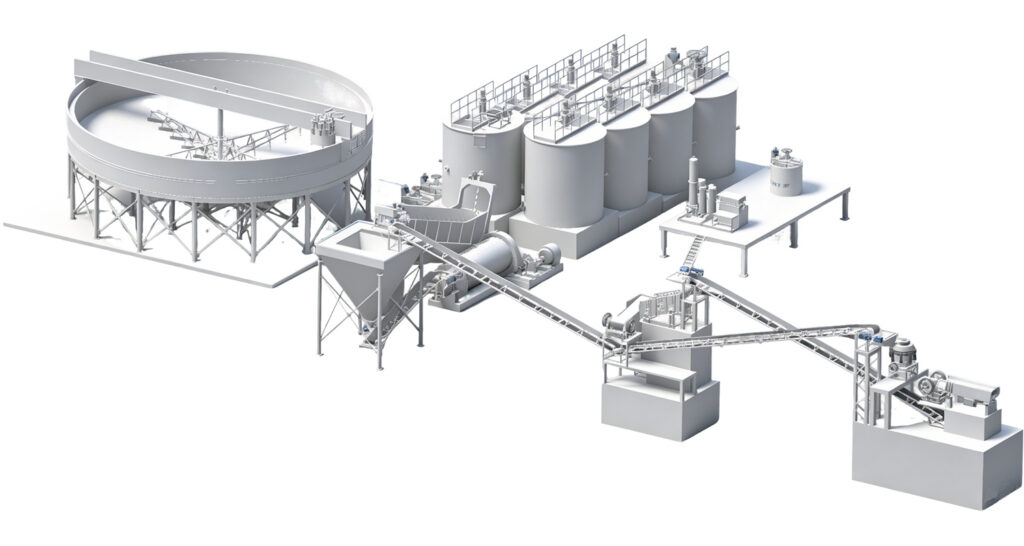
Oxidized gold ore forms when primary sulfide ores are exposed to oxygen over long geological periods. During this process, sulfide minerals (such as pyrite) transform into oxides, hydroxides, and clay-rich materials.
Typical characteristics include:
- Presence of iron oxides (hematite, limonite)
- Loose, porous structure
- Gold distributed in cracks or attached to gangue minerals
These features generally make gold more accessible—but also introduce challenges like:
- Slime coatings
- Poor permeability
- Reagent consumption variability
Why Process Selection Matters More Than You Think
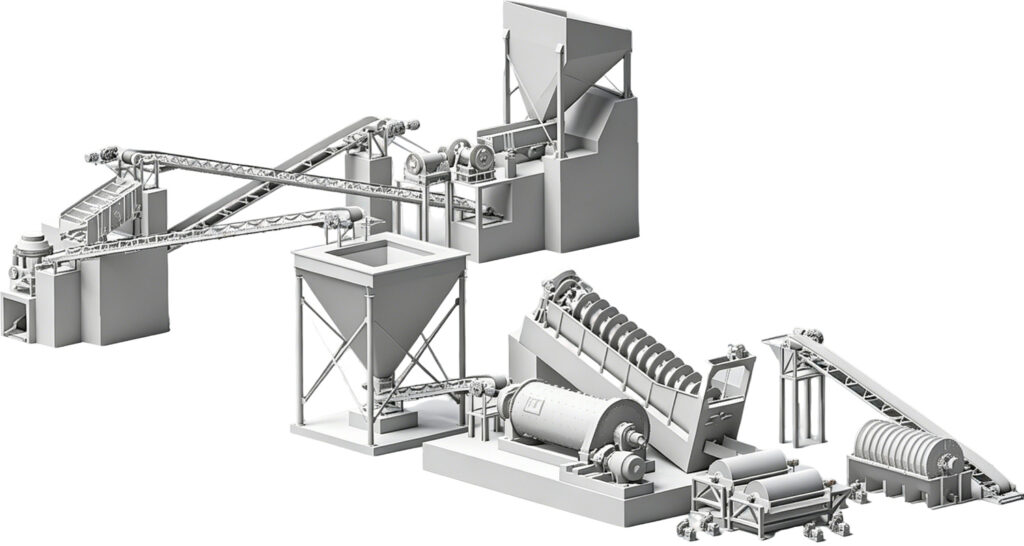
Unlike sulfide ores, oxidized ores do not follow a “one-size-fits-all” processing route.
In practice, recovery efficiency depends on:
- Gold particle size (coarse vs fine)
- Degree of oxidation
- Clay and impurity content
- Ore grade and scale of operation
That’s why most industrial flowsheets fall into four major extraction strategies, often used alone or in combination.
1. Non-Cyanide Extraction Methods (Physical Separation First)
Non-cyanide methods rely primarily on physical differences between gold and gangue minerals, rather than chemical dissolution.
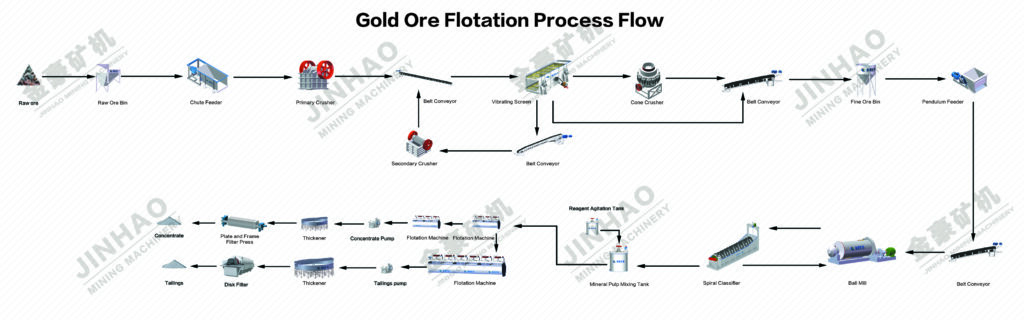
How It Works
These methods exploit:
- Density differences → gravity separation
- Surface properties → flotation
- Magnetic behavior → magnetic separation
Typical equipment includes:
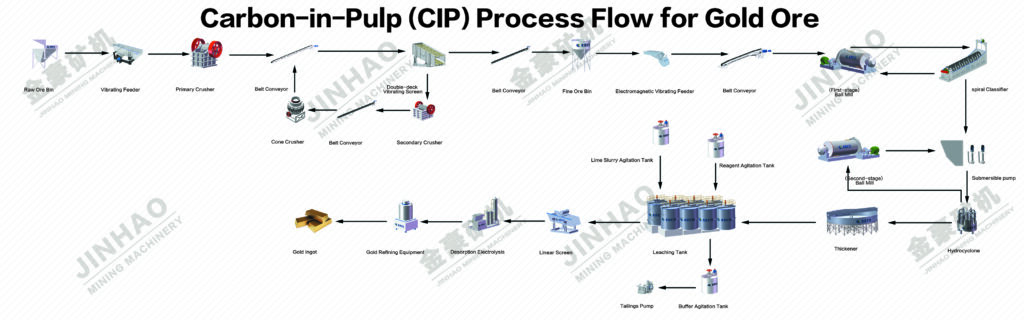
- Centrifugal concentrators
- Shaking tables
- Flotation cells
Gravity separation, for example, works particularly well when gold is coarse and free, allowing it to be separated efficiently without chemicals.
When It Works Best
This route is suitable when:
- Gold is relatively coarse
- Ore contains minimal clay interference
- Environmental restrictions limit chemical use
Limitations
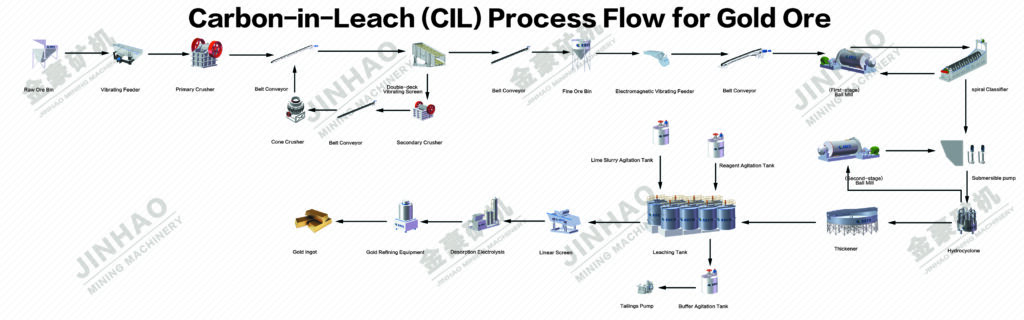
However, physical separation alone rarely achieves high recovery for fine gold.
In many cases, it serves as a pre-concentration step before further treatment.
2. Cyanidation: The Industry Standard
Cyanidation remains the dominant gold extraction method worldwide, accounting for the majority of production.
The Core Principle
Gold reacts with cyanide under alkaline conditions to form a soluble complex, which can then be recovered from solution.
Two Main Routes
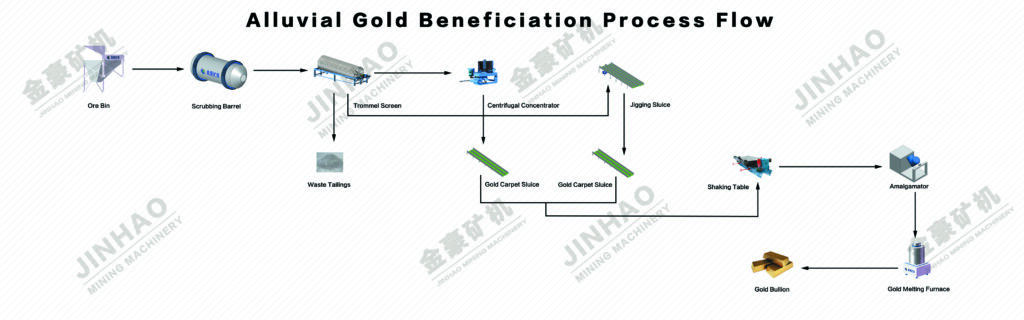
(1) Agitated Cyanidation (CIP / CIL)
- Suitable for medium-to-high grade ores
- Fine grinding required
- High recovery rates (often >90%)
The key difference:
- CIP (Carbon-in-Pulp): adsorption after leaching
- CIL (Carbon-in-Leach): simultaneous leaching and adsorption
(2) Heap Leaching
- Designed for low-grade ores
- Ore stacked on pads and irrigated with solution
- Lower cost but longer processing time
Heap leaching is widely used because of its low capital cost and scalability, although recovery rates are typically lower.
Key Control Factors
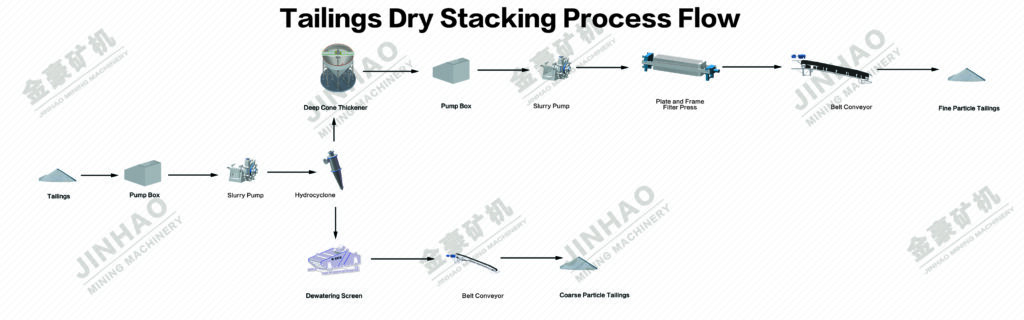
Successful cyanidation depends on:
- Particle size (grinding fineness)
- Cyanide concentration
- pH control (to prevent toxic gas formation)
- Oxygen availability
Trade-Offs

While highly effective, cyanidation presents:
- Environmental challenges
- Reagent cost considerations
- Sensitivity to impurities (e.g., copper, carbonaceous materials)
3. Sulfidation-Based Extraction (Transform Before Recovery)
In some oxidized ores, gold is not easily recoverable in its current form.
The solution is to convert the ore into a more treatable state.
How It Works
Sulfidation processes transform oxidized minerals into sulfide forms, which are easier to process using conventional techniques like flotation or cyanidation.
Common approaches include:
- Chemical sulfidation
- Biological oxidation
- Pressure oxidation
Why This Matters
This method is particularly useful when:
- Gold is encapsulated
- Direct cyanidation yields low recovery
- Complex mineralogy interferes with leaching
Practical Insight
Think of this method as “preparing the ore before extracting the gold.”
It adds complexity but can dramatically improve overall recovery.
4. Oxidation & Roasting Extraction
For more complex oxidized ores, thermal or chemical oxidation may be required.
Process Overview
Roasting involves heating ore in the presence of oxygen to:
- Remove impurities
- Break down mineral structures
- Expose gold for subsequent extraction
After roasting, gold is typically recovered using:
- Cyanidation
- Flotation
- Chemical leaching
When to Use It
This method is often chosen when:
- Ore contains refractory components
- Gold is locked within mineral matrices
- Standard leaching fails
Trade-Offs
- Higher capital and energy costs
- Environmental considerations (gas emissions)
- More complex operation
The Reality: Most Plants Use Combined Processes
In real-world operations, these methods are rarely used in isolation.
Typical flowsheets include:
- Gravity + cyanidation
- Flotation + cyanidation
- Roasting + leaching
For example, gravity separation may recover coarse gold first, while cyanidation extracts fine particles from the remaining material.
This hybrid approach helps maximize recovery while controlling costs.
Common Operational Challenges
Even with the right process, oxidized gold ores can still present difficulties:
1. Clay-Rich Ores
- Reduce permeability
- Affect heap leaching efficiency
2. Fine Gold Loss
- Difficult to recover via gravity
- Requires precise chemical control
3. Reagent Consumption
- High levels of impurities increase costs
4. Process Instability
- Variability in ore composition impacts performance
Optimization Strategies (What Actually Improves Recovery)
From a practical perspective, improving recovery often comes down to process tuning, not just equipment selection.
Key strategies include:
- Pre-treatment (desliming / pre-aeration): improves leaching efficiency
- Particle size control: ensures adequate gold exposure
- Reagent optimization: reduces cost while maintaining performance
- Process integration: combining methods for different particle sizes
In some cases, even small adjustments—such as improving slurry conditioning—can significantly increase recovery rates.
Final Thoughts
Oxidized gold ores may appear easier to process than sulfide ores, but achieving consistent, high recovery requires a deeper understanding of their variability.
The four main extraction approaches—
- Physical separation
- Cyanidation
- Sulfidation
- Roasting
—each solve different metallurgical challenges.
The key is not choosing one method, but designing the right combination for your specific ore.
In modern gold processing, success doesn’t come from following a standard flowsheet—it comes from engineering the process around the ore.