
Nickel Laterite Ore Processing: A Complete Overview
Key takeaways
- Most of the world’s nickel resource is in laterite, but laterite is harder to process than sulfide ore.
- The deposit profile decides the route: saprolite suits smelting, limonite suits leaching.
- RKEF produces ferronickel from saprolite and is energy-intensive.
- HPAL produces mixed hydroxide or sulfide from limonite with high recovery but high capital and technical risk.
- Atmospheric leaching is a lower-pressure alternative that trades recovery and residence time for lower capital.
Nickel is unusual among base metals because most of its resource is not in sulfide ore. The majority sits in laterite, a weathered rock formed in tropical climates where ultramafic rock has been leached by rain for millions of years. Laterite is abundant and close to the surface, but it is low grade, high in moisture and metallurgically awkward. That combination has shaped the industry.
Sulfide ore, by contrast, is easy to concentrate by flotation and smelt. It has been the backbone of nickel supply for a century, but the large, easy sulfide deposits are finite. As demand for stainless steel and batteries has grown, laterite has become the marginal source, and the processing route chosen for a laterite project is now one of the most consequential decisions in the nickel industry.
The main processing routes
RKEF
Pyrometallurgy. Rotary kiln-electric furnace smelting of saprolite to ferronickel. Proven and flexible, but energy-intensive and carbon-intensive.
HPAL
Hydrometallurgy. High-pressure acid leaching of limonite at 250–260°C. High nickel and cobalt recovery, high capital and technical risk.
Atmospheric leach
Hydrometallurgy. Lower-temperature acid leaching of limonite or transitional ore. Lower pressure and capital, but slower kinetics and lower recovery.
The laterite profile
A laterite deposit is layered. The upper limonite zone is rich in iron oxides and low in magnesium, with nickel around 1–1.5% and cobalt around 0.1–0.2%. Below it, the saprolite zone is rich in magnesium silicates, with nickel around 1.5–3% and much less cobalt. Between them lies a transition zone that shares properties of both.
The boundary is not sharp, and it moves with topography and weathering intensity. That matters because the two zones want different processes. A mine that blends them into one feed can end up with a material that suits neither route particularly well.
Pyrometallurgy: RKEF
Rotary kiln-electric furnace (RKEF) is the dominant route for saprolite. The ore is dried and calcined in a rotary kiln, then smelted in an electric furnace to produce ferronickel or nickel matte. The process is proven at large scale and can handle a range of saprolite grades.
The drawbacks are energy and emissions. Drying and smelting consume large amounts of power, and the electric furnace is usually the largest single load on a project. The process also produces slag that must be managed. In countries with cheap hydropower, RKEF can be competitive; in countries with expensive or carbon-intensive grid power, the economics are harder.
Hydrometallurgy: HPAL
High-pressure acid leaching (HPAL) treats limonite in autoclaves at 250–260°C and 4–5 MPa. Sulfuric acid dissolves nickel and cobalt along with iron and other impurities; the iron is precipitated as hematite or jarosite, and the nickel and cobalt are recovered from solution. Recovery is typically above 90% for both metals.
HPAL’s advantage is that it captures cobalt as well as nickel, which matters for battery supply chains. Its disadvantage is capital cost and technical complexity. Autoclaves, acid plants, slurry handling and scale formation have caused commissioning problems at several projects. A successful HPAL plant is a chemical plant as much as a mine.
Atmospheric and other routes
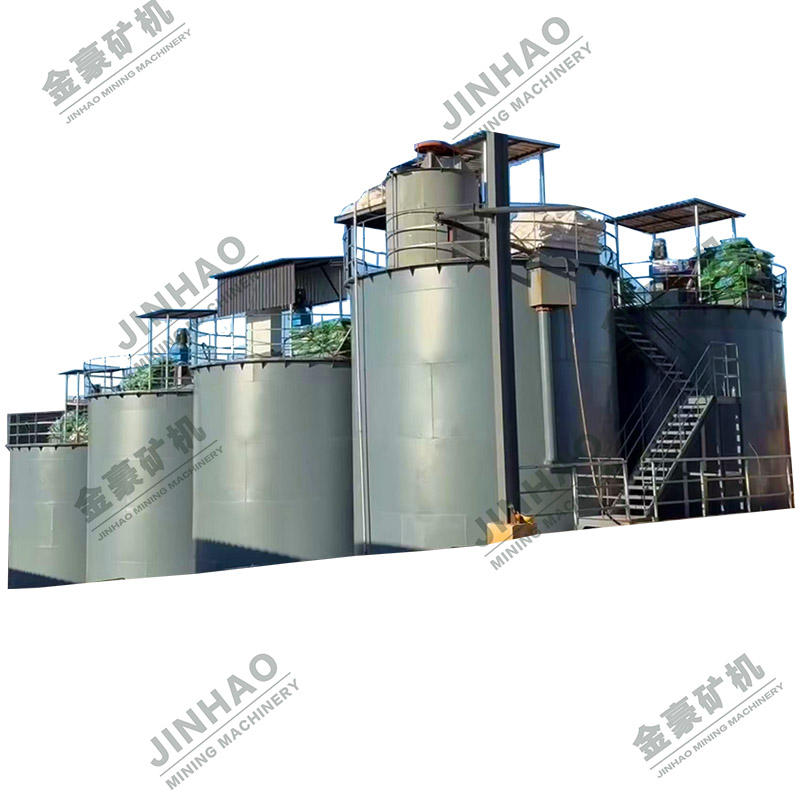
Atmospheric leaching operates at around 100–110°C, below the boiling point of the slurry, and avoids the autoclave. It is simpler and cheaper to build, but the kinetics are slower and acid consumption can be high. Recovery is often 80–90%, lower than HPAL, and the process is sensitive to ore mineralogy.
The Caron process, a reduction roast followed by ammonia leaching, was used at several older plants. It is less common today because of energy cost and lower recovery, but it still illustrates an important point: laterite processing has many possible routes, and the right one depends on the ore, the energy price and the product market.
| Route | Best feed | Product | Nickel recovery | Main issue |
|---|---|---|---|---|
| RKEF | Saprolite | Ferronickel or matte | 90–95% | Energy and carbon intensity |
| HPAL | Limonite | MHP or mixed sulfide | 90%+ | Capital, autoclave reliability |
| Atmospheric leach | Limonite, transition ore | MHP or sulfide | 80–90% | Slow kinetics, acid consumption |
| Caron | Limonite | Nickel oxide or metal | 75–85% | Energy, lower recovery |
Indonesia and the global supply shift
Indonesia has become the centre of the nickel laterite industry. Its ore is relatively young, high in moisture and often high in saprolite, which made RKEF the default route for stainless steel feed. More recently, HPAL capacity has grown to supply battery-grade nickel, and the country now accounts for a large share of global nickel production.
The shift has consequences beyond Indonesia. Laterite projects in other countries have to compete with Indonesian scale and cost, and the nickel price has become more volatile as supply has expanded. For a project developer, that means the route choice is not only technical; it is a bet on product mix, energy cost and the direction of the battery market.
Tailings and residue management
Laterite processing produces large volumes of residue. HPAL leaves an iron-rich leach residue that must be neutralised and stored, while RKEF produces slag that can be used in construction or stored. Both routes need a tailings strategy from the start, because the volumes are large and the chemistry can be aggressive.
Water management is part of the same problem. Laterite mines are often in high-rainfall tropical regions, so the balance between fresh water, recycle water and discharge is delicate. A project that ignores the water balance during design will spend its operating life managing it.
Water and acid supply
Hydrometallurgical laterite routes are acid plants as much as mines. HPAL consumes sulphuric acid in large quantities, and the acid plant, sulphur supply and logistics can be a project bottleneck. Atmospheric leaching uses less pressure but often more acid per tonne of ore, and the neutralisation of residual acid produces a residue that must be managed.
Water is equally important. Laterite processing consumes water for slurry transport, leaching and washing, and the residue retains moisture. In high-rainfall regions the challenge is managing excess water; in dry regions it is securing enough. Either way, the water balance should be part of the route selection, not a detail left to the EPCM contractor. In practice, water is often the first constraint a project hits.
Choosing a route
The first question for any project is the ore profile. If saprolite dominates and power is cheap, RKEF is usually the default. If limonite dominates and cobalt matters, HPAL or atmospheric leaching is the route. If the deposit is a blend, the project may need two circuits or a deliberate blend that suits one route.
The second question is scale. HPAL and RKEF both have strong economies of scale; small laterite deposits are difficult to justify with either. The third is infrastructure: acid supply, power, water, port access and tailings management all shape the choice. A technically sound route that cannot be supplied or permitted is not a route.
For the broader context, see our pages on nickel processing and nickel mining.
Rule of thumb: saprolite goes to a furnace, limonite goes to a leach. If your deposit is a blend, test both zones separately before assuming one flowsheet can treat the whole profile.
Frequently asked questions
Why is nickel laterite harder to process than sulfide ore?
Laterite is low grade, high in moisture and chemically complex, and the nickel is dispersed in iron oxides or magnesium silicates rather than in discrete sulfide minerals. That makes it difficult to concentrate by flotation and usually requires smelting or leaching.
What is the difference between saprolite and limonite?
Saprolite is the lower, magnesium-rich zone and suits pyrometallurgical smelting. Limonite is the upper, iron-rich zone and suits acid leaching. They differ in nickel grade, cobalt content, moisture and gangue chemistry.
What is HPAL?
High-pressure acid leaching. Limonite slurry is treated with sulfuric acid in autoclaves at 250–260°C and 4–5 MPa, dissolving nickel and cobalt for recovery from solution.
Which laterite route produces battery-grade nickel?
HPAL and atmospheric leaching can produce mixed hydroxide precipitate or mixed sulfide, which are suitable feed for battery-grade nickel and cobalt refining. RKEF produces ferronickel, which is mainly used for stainless steel.
Is laterite processing profitable?
It depends on ore grade, energy and acid cost, product price and capital intensity. Laterite projects are capital-intensive and sensitive to nickel price, which is why many projects are staged or built in modules.
Evaluating a nickel laterite project? Send us your ore profile and product target and we will compare the realistic processing routes.
Talk to a Jinhao engineer