
Lithium Ore Processing: Producing Spodumene Concentrate
Key takeaways
- Spodumene is the main hard-rock lithium mineral, with a theoretical grade of about 8% Li2O.
- Marketable spodumene concentrate typically grades 5.5–6.5% Li2O.
- Dense medium separation can reject coarse gangue before flotation.
- Flotation handles the fine fraction and is sensitive to slimes and mica.
- Magnetic separation removes iron-bearing minerals that would contaminate the concentrate.
Hard-rock lithium starts with a mineral called spodumene. It is a lithium aluminium silicate, LiAlSi2O6, and in a clean pegmatite it can be concentrated to a saleable product using gravity, dense medium separation, flotation and magnetic separation. The concentrate is then shipped to a converter, where it is roasted, leached and refined into lithium carbonate or hydroxide.
The beneficiation step is simpler than the refining step, but it is not trivial. Spodumene is brittle, the pegmatite gangue includes feldspar, quartz and mica, and the presence of iron-bearing minerals can downgrade the concentrate. The flowsheet has to balance liberation, slime control and product quality.
The ore and the mineral
Spodumene occurs in lithium-pegmatites, coarse-grained rocks formed from the last fraction of a cooling magma. The crystals can be large, sometimes centimetres across, which is good for liberation but also means the ore is brittle and prone to fracturing during blasting and crushing. The theoretical Li2O content of pure spodumene is about 8.0%, but the mineral in a pegmatite is rarely pure.
Other lithium minerals may be present, including petalite, lepidolite and amblygonite. Each behaves differently in beneficiation and refining. A flowsheet designed for spodumene may not work for petalite, and a concentrate that contains a mixture may be penalised by the converter.
Crushing and dense medium separation
The ore is crushed and screened to a suitable size for dense medium separation, often 6–25 mm. Spodumene has a specific gravity of about 3.1–3.2, while quartz and feldspar are around 2.6–2.7. That contrast allows a heavy-medium circuit to reject a large share of the gangue before grinding.
DMS is most effective when the spodumene is coarse and well liberated. It produces a heavy fraction enriched in spodumene and a light fraction that can be rejected or treated separately. The process is cheap per tonne and reduces the load on the flotation circuit, but it requires medium recovery and careful control of the separation density.
Grinding and desliming
The DMS concentrate and the fine fraction are ground to liberate the remaining spodumene. The target size depends on the crystal size, but a P80 of roughly 100–200 µm is common. Overgrinding is a risk because spodumene is brittle and fine slimes are difficult to float.
Desliming is a critical step. Fine clay and mica particles coat mineral surfaces, consume reagents and destabilise froth. A cyclone or thickener removes the slimes before flotation, and the slimes may need separate treatment or disposal. A flotation circuit that ignores desliming will struggle to reach concentrate grade.
Flotation
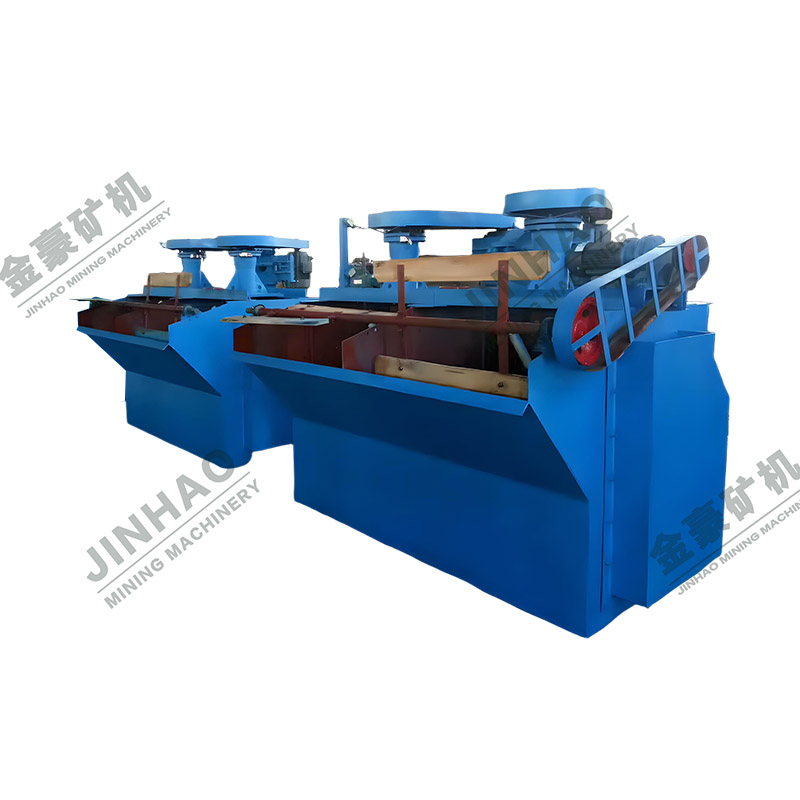
Spodumene flotation usually uses an anionic collector, such as a fatty acid or soap, at alkaline pH. The gangue minerals — quartz and feldspar — are depressed, while spodumene reports to the froth. Mica is often floated first in a separate stage because it is naturally hydrophobic and would otherwise contaminate the concentrate.
The reagent scheme is sensitive to water chemistry and slimes. Hard water, high dissolved salts and residual reagents from upstream can change the flotation response. The circuit needs conditioning time and a stable feed to perform consistently.
Magnetic separation and dewatering
Iron-bearing minerals such as mica, tourmaline and garnet can report to the concentrate and raise the iron content. A magnetic separation step, often a high-intensity separator, removes these minerals and improves the concentrate specification. The magnetic fraction is a small stream but can be important for product quality.
The final concentrate is thickened, filtered and dried. Moisture is a transport cost, and the converter may specify a maximum moisture content. The dewatering circuit should be designed for the fine particle size of the concentrate, which can be difficult to filter.
| Stage | Purpose | Typical target |
|---|---|---|
| Crushing and screening | Prepare DMS feed | 6–25 mm |
| Dense medium separation | Reject coarse gangue | 2.7–2.9 SG cut |
| Grinding | Liberate spodumene | P80 100–200 µm |
| Desliming | Remove fines and coatings | Cyclone or thickener |
| Flotation | Upgrade spodumene | 5.5–6.5% Li2O |
| Magnetic separation | Remove iron minerals | Low iron concentrate |
Product specification
A spodumene concentrate is sold on Li2O grade, iron content, moisture and particle size. The converter wants a consistent product that will roast and leach predictably. A concentrate with high iron or mica can cause problems in the converter and may be penalised.
The grade is not the only measure of quality. The mineralogy matters: a concentrate that contains petalite or lepidolite may behave differently from one that is mostly spodumene. The converter’s specification should be understood before the beneficiation circuit is designed.
- Crush and screen. Produce a coarse feed for dense medium separation and a fine feed for grinding.
- Pre-concentrate by DMS. Reject coarse quartz and feldspar, reducing the tonnage to the fine circuit.
- Grind and deslime. Liberate spodumene and remove slimes that would interfere with flotation.
- Float spodumene. Use an anionic collector at alkaline pH, with a mica pre-float if needed.
- Remove iron and dewater. Magnetic separation and filtration produce a saleable concentrate.
For the wider context, see our lithium processing page and the flotation equipment category.
What can go wrong
The most common problem is slime coating. Fine particles of mica and clay coat spodumene surfaces, making them hydrophilic and reducing flotation recovery. Desliming helps, but it also removes fine spodumene that may be worth recovering. The circuit has to balance slime removal against lithium loss.
The second is reagent sensitivity. Anionic collectors respond to water chemistry, and a change in water quality or pH can shift the flotation result. Hard water and high dissolved salts are common in mining regions, and the reagent scheme may need adjustment.
The third is iron contamination. Iron-bearing minerals can report to the concentrate through entrainment or incomplete magnetic separation. The converter penalises iron, so the magnetic circuit and the flotation selectivity both matter.
The converter interface
Spodumene concentrate is sold to a converter, which roasts it at high temperature to convert the alpha phase to a more reactive beta phase, then leaches it with acid. The converter cares about lithium grade, iron, moisture and mineralogy. A concentrate that is high in mica or petalite may behave differently in the kiln.
The commercial terms also matter. Concentrate pricing is usually based on Li2O content with adjustments for impurities, and the converter may require a minimum grade and a maximum moisture. The beneficiation circuit should be designed around those terms, not just around a laboratory recovery target. The converter’s kiln is not a laboratory; it rewards consistency. Consistent grade and moisture are often worth more than a marginal increase in Li2O at the mine.
Water and tailings
Spodumene beneficiation consumes water for washing, desliming and flotation. The tailings contain fine quartz, feldspar and mica, and they can be difficult to thicken. Water recycle is standard, but dissolved salts and residual reagents can build up and affect flotation.
The tailings storage and water balance should be designed with the same care as the flotation circuit. A lithium plant that cannot manage its fines will struggle to maintain recovery, regardless of how well the flotation cells perform. In dry regions, water availability can be the factor that decides whether flotation or DMS leads the flowsheet.
Rule of thumb: if the spodumene is coarse, DMS will do a lot of the work cheaply. If it is fine and intergrown, flotation becomes the core of the circuit, and desliming becomes the difference between success and failure.
Frequently asked questions
What is spodumene concentrate?
A beneficiated spodumene product, typically grading 5.5–6.5% Li2O, sold to a converter for refining into lithium carbonate or hydroxide.
Why is dense medium separation used for lithium ore?
Spodumene has a higher specific gravity than quartz and feldspar, so DMS can reject coarse gangue before grinding. It reduces the tonnage fed to flotation and lowers cost.
What is the typical grind size for spodumene flotation?
Usually a P80 of about 100–200 µm, depending on the crystal size. The target is liberation without overgrinding, because fine slimes interfere with flotation.
Why is mica a problem in spodumene flotation?
Mica is naturally hydrophobic and floats easily, so it can report to the concentrate and dilute the lithium grade. A mica pre-float or a suitable depressant is often used.
How is iron removed from spodumene concentrate?
By magnetic separation, often high-intensity magnetic separation, which removes iron-bearing minerals such as tourmaline and garnet. The magnetic fraction is small but can affect product quality. That is why magnetic separation is part of the flowsheet, not an optional extra.
Developing a spodumene project? Send us your mineralogy and target concentrate grade and we will review the beneficiation flowsheet.
Talk to a Jinhao engineer