

Copper Sulphide vs Oxide Ore: Which Process Wins?

Key takeaways
- Copper ore type decides the flowsheet. Sulphide ore floats; oxide ore leaches.
- Most of the world’s copper is sulphide and goes through flotation, smelting and refining.
- Oxide ore suits leaching and SX-EW, which needs far less grinding and lower capital.
- Mixed ore is the hard case, and transitional zones cause more plant problems than either end member.
- Mineralogy, not grade, makes the call — a 0.4% oxide ore may be more economic than a 0.6% refractory sulphide.
Copper deposits are rarely one thing. A typical porphyry system is oxidized near the surface, transitions through a mixed zone, and becomes sulphide at depth. Each zone behaves differently in the plant, and the mineralogy — not the head grade — determines which processing route makes sense.
Why the two ore types behave differently
Copper sulphide minerals such as chalcopyrite, chalcocite and bornite respond well to froth flotation. Their surfaces can be made hydrophobic with a collecting agent, so they attach to air bubbles and float, leaving the gangue behind. That makes flotation the natural route for sulphide ore.
Oxide copper minerals — malachite, azurite, chrysocolla and cuprite — do not respond to conventional sulphide flotation. They are, however, readily soluble in dilute acid. That makes leaching the natural route: dissolve the copper, then recover it from solution.
| Characteristic | Sulphide ore | Oxide ore |
|---|---|---|
| Main minerals | Chalcopyrite, chalcocite, bornite | Malachite, azurite, chrysocolla, cuprite |
| Grind size needed | Fine, for liberation before flotation | Coarse crush, or agglomeration for heap leach |
| Recovery method | Froth flotation | Acid leaching, solvent extraction, electrowinning |
| Intermediate product | Concentrate for smelting | Pregnant leach solution |
| Final product | Refined cathode | Electrowon cathode |
| Capital intensity | High — concentrator plus smelter link | Lower for heap leach, higher for vat leach |
| Typical recovery | 85–92% for flotation plus smelting | 75–90% for heap leach; higher for vat leach |
Processing sulphide copper
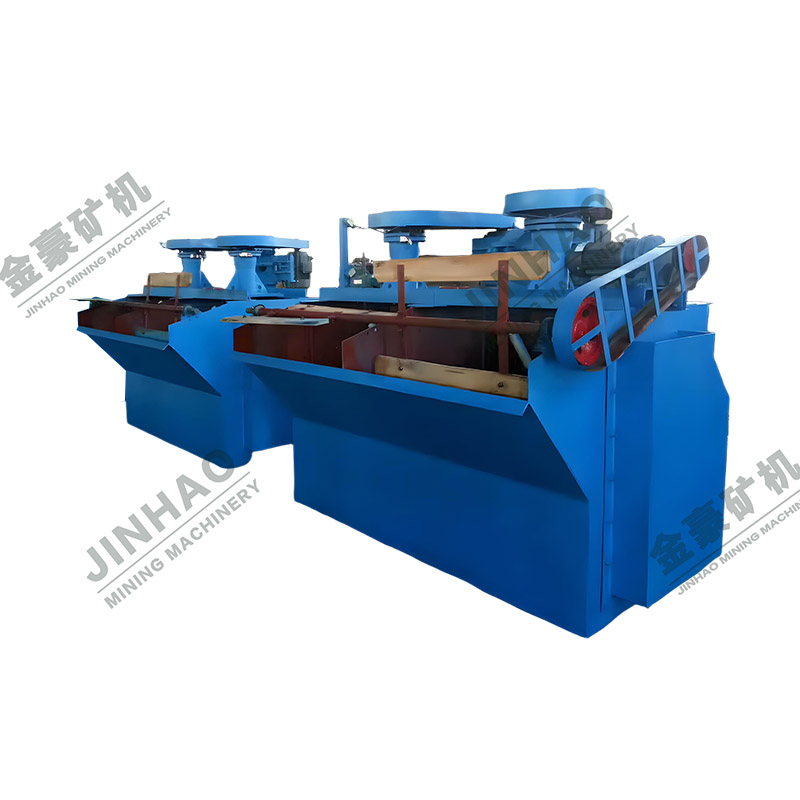
Sulphide ore is crushed and ground fine enough to liberate the copper minerals, then floated in a circuit of rougher, cleaner and scavenger stages. The concentrate goes to a smelter, where it is smelted to matte, converted to blister copper and finally electrorefined to cathode.
The economics depend heavily on recovery and on grind size. Because grades are low, the concentrator handles enormous tonnages, and grinding is the largest single energy cost. Flotation performance is the main lever on revenue, which is why the circuit is monitored and optimised continuously. Our overview of copper mining covers the full route.
Processing oxide copper
Oxide ore is usually treated by heap or vat leaching. Crushed ore is stacked or placed in vats, and dilute sulphuric acid is applied. Copper dissolves into the pregnant leach solution, which is then purified by solvent extraction and recovered by electrowinning to produce cathode directly.
The great advantage is that no fine grinding is needed, which removes the largest cost in the sulphide route. The disadvantage is that recovery is often lower and the process is sensitive to the mineralogy of the oxide: chrysocolla and copper-bearing clays, in particular, can be slow and difficult to leach.

The transition and mixed zones
In practice, most operations deal with a blend. The oxidized cap sits above the sulphide body, and between them lies a mixed zone containing both sulphide and oxide minerals — often with secondary chalcocite enrichment that makes it the highest-grade part of the deposit.
The mixed zone is the awkward one. It floats poorly, because the oxide component does not respond to sulphide collectors, and leaches poorly, because the sulphide component does not dissolve in acid. Plants handling mixed ore often need either a blended feed with careful ratio control, or a circuit flexible enough to switch routes.
This is a strong argument for early mineralogical test work. Knowing the proportions of oxide and sulphide copper, and how they vary with depth, allows the flowsheet to be designed for the ore body as a whole rather than for the sample that happened to be sent to the laboratory.
How to decide your route
Three questions settle it in most cases. What proportion of the copper is oxide versus sulphide? What is the acid consumption of the gangue — because acid-hungry gangue makes leaching uneconomic? And what grind size does the sulphide fraction need for adequate liberation?
Where sulphide dominates, flotation is the answer. Where oxide dominates and acid consumption is reasonable, leaching with solvent extraction and electrowinning is usually better. Where the ore is mixed, the decision becomes a blend of the two, and often the best solution is a plant that can treat both streams separately.
Rule of thumb: assay the mineralogy before you design the plant. Copper head grade tells you almost nothing about whether the ore will float or leach.
Frequently asked questions
How can I tell if copper ore is oxide or sulphide?
Visually, oxide copper minerals such as malachite and azurite are bright green or blue, while sulphides are typically grey, brassy or dark. Reliable identification requires mineralogical examination and acid-soluble copper assays, not appearance alone.
Which copper ore type is more common?
Sulphide ore accounts for the great majority of world copper production and most large porphyry deposits. Oxide ore is typically found in the weathered cap above a sulphide body and is often smaller in tonnage.
Why can’t oxide copper be floated?
Because oxide copper minerals do not respond to the collectors used for sulphide flotation — their surfaces do not become hydrophobic in the same way. Some oxide minerals can be floated with specialised reagent schemes, but commercial practice generally favours leaching.
What is the mixed zone and why is it a problem?
The mixed zone lies between the oxidized cap and the fresh sulphide ore and contains both oxide and sulphide copper minerals. It floats poorly and leaches poorly, so plants treating it need careful blending or a flexible circuit.
Does oxide copper ore need grinding?
Usually not to the same fineness as sulphide ore. Heap leaching typically needs only crushing and sometimes agglomeration, while vat leaching needs a coarser crush still. This is one of the main cost advantages of the oxide route.
Not sure whether your copper ore should float or leach? Send us your mineralogy and assay data and we will advise.
Talk to a Jinhao engineer