
Iron Ore Processing: From ROM to Furnace Feed
Key takeaways
- Iron ore is sold by size and chemistry, not just by iron content.
- Lump, fines and pellets are different products with different customers and premiums.
- Magnetite and hematite need different beneficiation routes; one is magnetic, the other usually is not.
- Pelletizing is a separate plant with its own grinding, balling and induration steps.
- Gangue chemistry decides cost: silica, alumina, phosphorus and moisture all carry penalties.
The world mines roughly 2.5 billion tonnes of iron ore a year, and almost all of it is destined for steel. Yet iron ore is not a single commodity. A blast furnace operator cares about iron content, but also about size, strength, reducibility and the level of silica, alumina, phosphorus and sulphur. A direct reduction plant cares even more: it wants pellets above 67% Fe with very low gangue.
That is why an iron ore flowsheet is designed around the product, not just the deposit. The same ore can become lump for a blast furnace, sinter fines for a steel mill, or pellet feed for a pellet plant. Each route has different crushing, screening and beneficiation requirements.
What is actually in iron ore
Iron ore is a rock containing enough iron-bearing minerals to be worth mining. Four minerals dominate commercial deposits, and each behaves differently in a plant.
| Mineral | Formula | Theoretical Fe | Processing note |
|---|---|---|---|
| Hematite | Fe2O3 | 69.9% | Weakly magnetic; gravity, flotation or high-intensity magnetic separation |
| Magnetite | Fe3O4 | 72.4% | Strongly magnetic; low-intensity magnetic separation is the backbone |
| Goethite / limonite | FeO(OH)·nH2O | about 63% | Hydrated and often high in alumina; difficult to upgrade |
| Siderite | FeCO3 | 48.2% | Low grade and high in carbonate; usually needs roasting |
Run-of-mine grades range from below 30% Fe in low-grade deposits to over 60% in direct shipping ore. Blast furnace feed typically needs 62–67% Fe, low alumina and controlled phosphorus. The gap between the ore body and the product is what beneficiation has to close.
The five stages from run-of-mine to product
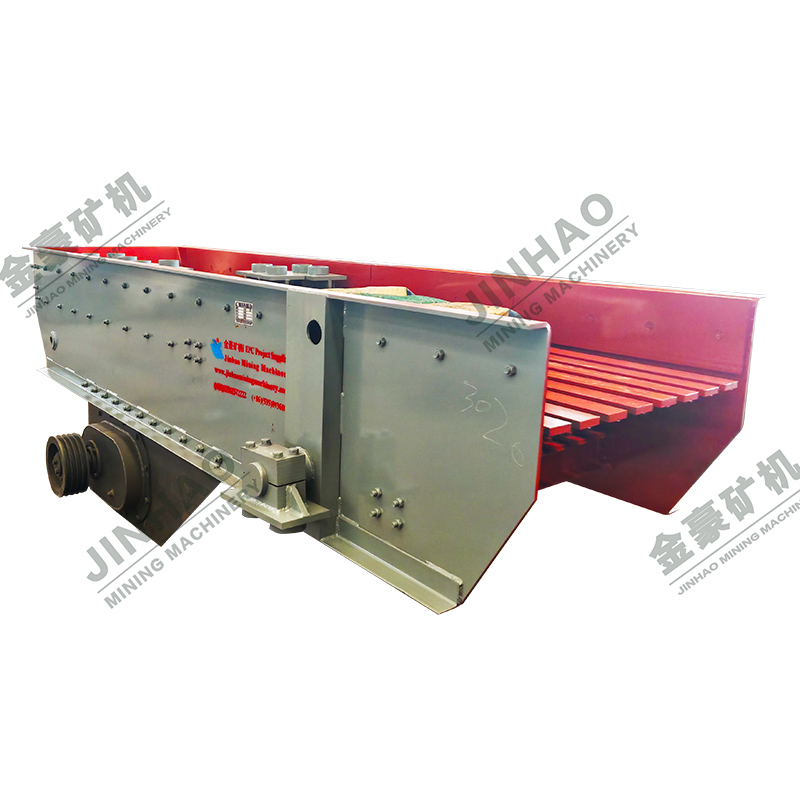
Primary crushing usually starts with a gyratory crusher at high tonnage or a jaw crusher at smaller capacity. Run-of-mine lumps can reach 1.0–1.5 m, and the first stage reduces them to roughly 150–200 mm. Secondary and tertiary cone crushers take the product down to the size range demanded by the screens and the beneficiation stage.
Screening does two jobs. It removes finished product before further crushing, and it splits the flow into size fractions for different markets. Lump ore is typically 6.3–31.5 mm, sinter fines are roughly 0.15–6.3 mm, and pellet feed is ground far finer. A plant that can produce a strong lump product earns a premium, but only if the ore breaks into competent lumps rather than crumbling.
Beneficiation depends entirely on mineralogy. Magnetite is concentrated with low-intensity magnetic separators, often after stage grinding. Hematite is upgraded with gravity circuits, high-intensity magnetic separation or flotation, depending on grain size and gangue. Goethite-rich and oolitic ores are the hardest, because the iron is fine-grained and closely intergrown with silica and alumina.
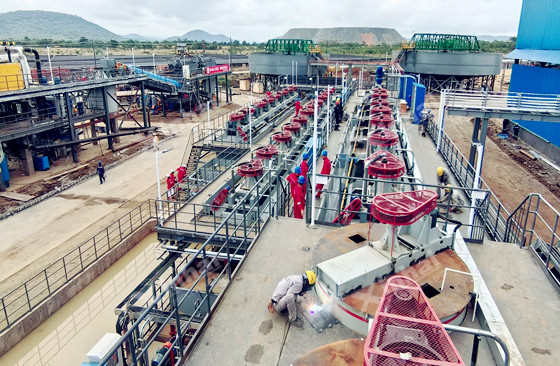
Dewatering matters more than it looks. Moisture is dead freight: every percentage point of water in a concentrate costs money to transport and can cause handling problems at the steel mill. Thickeners and filter presses typically bring concentrate moisture down to 8–10%.
Product specifications drive the flowsheet
| Product | Size | Typical Fe | Main use |
|---|---|---|---|
| Lump ore | 6.3–31.5 mm | 62–65% | Direct blast furnace burden |
| Sinter fines | 0.15–6.3 mm | 57–63% | Sinter plant feed |
| Pellet feed | 80% passing 45–75 µm | 65%+ | Pelletizing |
| Blast furnace pellets | 9–16 mm | 62–67% | Blast furnace burden |
| Direct reduction pellets | 9–16 mm | 67%+ | DRI and HBI production |
Pelletizing is effectively a second industry attached to the mine. Concentrate is ground until 80% passes 45–75 µm, mixed with about 0.5–1% bentonite as a binder, rolled into balls on a disc or drum, and then indurated at 1,250–1,350°C. The heat hardens the pellets and gives them the strength to survive transport and a blast furnace shaft.
Direct reduction pellets are a stricter product. They need more than 67% Fe, low silica and alumina, and very low phosphorus. As steelmakers shift toward electric arc furnaces and hydrogen-based reduction, demand for these premium pellets is growing, and pellet plants are being designed with tighter chemistry limits than before.
When the ore can skip beneficiation
Direct shipping ore is exactly what the name suggests: ore that can be crushed, screened and sold without a concentrator. Deposits grading 58–62% Fe with acceptable gangue can support a simple dry plant, which is why they were mined first and why few remain.
Most new projects are lower grade. A 30–40% Fe ore needs beneficiation, and the cost of that beneficiation has to be paid from the difference between concentrate value and the cost of mining and processing. That difference is thinner than it looks, especially when transport distances are long and the product is a low-value bulk commodity.
Design rule: fix the product specification before sizing the plant. A flowsheet built for sinter fines cannot simply be switched to direct reduction pellets when the market changes.
Where the water and tailings go
Iron ore beneficiation produces large volumes of tailings, and water recovery is a major operating cost. Thickeners recover process water, and filter presses or dry stacking reduce the volume sent to the tailings storage facility. In arid regions, water recovery can decide the project’s viability as much as metallurgy does.
Our pages on hematite processing and magnetite processing go deeper into the two main ore routes. For the equipment side, the crushing and grinding equipment categories cover the main machine types.
Frequently asked questions
What is the difference between iron ore fines and pellets?
Fines are fine ore, typically under 6.3 mm, sold to sinter plants. Pellets are made by grinding concentrate, adding a binder, rolling balls and firing them at 1,250–1,350°C to produce hard, uniform spheres.
What grade of iron ore is worth mining?
It depends on costs and logistics. Direct shipping ore can work at 58–62% Fe where transport is cheap. Lower-grade magnetite and hematite can be economic at 30–40% Fe if beneficiation is simple and the concentrate market is close.
Why is magnetite easier to process than hematite?
Magnetite is strongly magnetic, so low-intensity magnetic separation can concentrate it cheaply and at coarse sizes. Hematite is weakly magnetic and often needs gravity, high-intensity magnetic separation or flotation.
What is direct reduction grade iron ore?
Iron ore feed for direct reduction typically needs more than 67% Fe, low silica and alumina, and very low phosphorus. It is usually supplied as high-quality pellets.
How much water does an iron ore plant use?
Water use varies widely with ore and climate. Wet beneficiation and transport can consume several cubic metres per tonne of product, which is why thickeners, filter presses and water recycling are standard in modern plants.
Planning an iron ore plant or upgrading an existing one? Send us your assay, size analysis and target product and we will outline the flowsheet.
Talk to a Jinhao engineer