
Refractory and Sulphide Gold Ore: Why It Is Hard to Process
Key takeaways
- Refractory means cyanide fails. Recovery by direct leaching is uneconomic, usually below about 80%, for a reason that grinding cannot fix.
- Two causes dominate: gold locked inside sulphide minerals, and ore that consumes cyanide or preg-robs dissolved gold.
- Pre-treatment unlocks the gold. Roasting, pressure oxidation and bio-oxidation all destroy the host mineral so the leach can reach the gold.
- Flotation often comes first, concentrating the sulphides so only a small fraction needs expensive pre-treatment.
- Diagnosis must come before design. The right pre-treatment depends on exactly which sulphide is locking the gold.
A free-milling ore gives up its gold to a simple cyanide leach. A refractory ore does not, and no amount of extra grinding will change that. This is the single most consequential distinction in gold processing: it is the difference between a straightforward CIL plant and a circuit with an autoclave, a roaster or a bio-leach reactor in front of it.
What makes gold ore refractory
Refractory behaviour has two main causes, and a given ore can suffer from both.
Physical locking
The gold is encapsulated inside a mineral that cyanide cannot penetrate. The usual culprits are pyrite and arsenopyrite, but other sulphides behave the same way. The gold may be sub-microscopic — invisible even under a microscope — and it stays locked no matter how finely the ore is ground, because the enclosing grain is ground along with it.
This is why liberation degree alone does not solve refractory ore. Grinding frees minerals from each other, but it cannot free gold that sits inside a single sulphide crystal.
Chemical interference
Some ores actively fight the leach. Copper minerals dissolve in cyanide and consume it, so the reagent is used up before it reaches the gold. Carbonaceous matter — graphitic or organic material — adsorbs dissolved gold out of solution, a phenomenon called preg-robbing, so the gold never reaches the recovery stage at all. Both problems leave the plant paying for cyanide and recovering little.
The three pre-treatment options
| Route | How it works | Strengths | Main drawbacks |
|---|---|---|---|
| Roasting | Heats ore to 500–700 °C in air, oxidizing sulphides | Well proven, handles carbonaceous ore | High energy use, gas cleaning and SO₂ capture required |
| Pressure oxidation (POX) | Oxidizes sulphides in an autoclave at high temperature and pressure | High recovery, handles arsenic-bearing ore | High capital cost, complex autoclave operation |
| Bio-oxidation | Bacteria oxidize sulphides in aerated tanks | Lower operating cost, no gas emissions | Slow, sensitive to temperature and chemistry |
All three do the same essential job: they destroy the sulphide lattice so the gold inside is exposed to cyanide. Choosing between them comes down to ore mineralogy, arsenic content, energy cost, capital available and the permitting environment.
Why flotation usually comes first
Pre-treatment is expensive, and it is usually applied to a small stream rather than to the whole ore. The standard approach is to float the sulphide minerals into a concentrate, which typically represents a small fraction of the ore mass but contains most of the gold. Only that concentrate goes to the roaster or autoclave.
This is also why flotation circuits on refractory deposits are carefully controlled: recovery of the sulphide minerals is not a grade problem but a value problem. Any sulphide that escapes into the flotation tailing takes its gold with it, and that gold is lost with no second chance, because the tailing never sees the pre-treatment circuit.
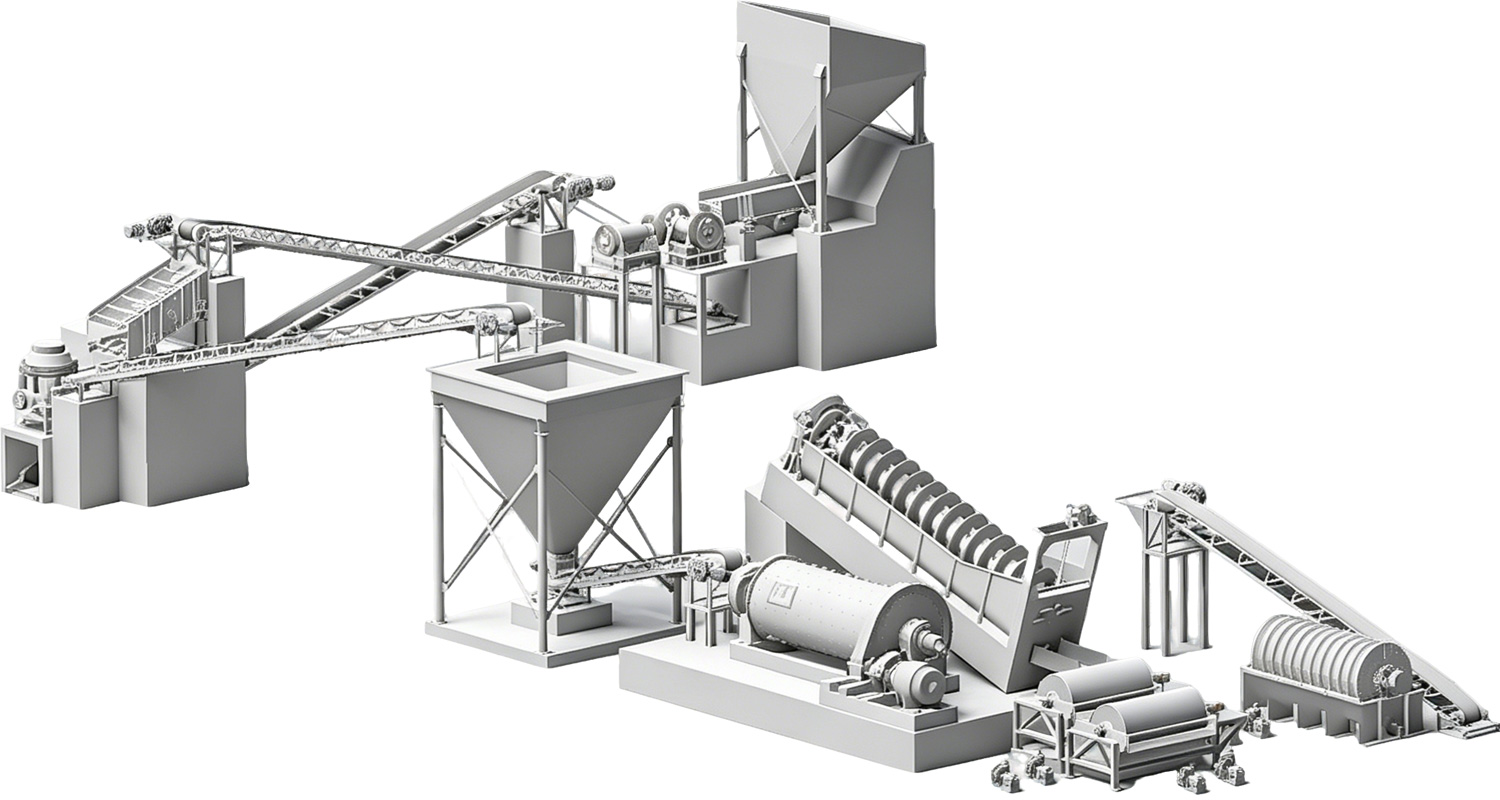
Fine gold in sulphides: the flotation route
Where the gold is extremely fine and intimately intergrown with pyrite or arsenopyrite, flotation may be the recovery method in its own right rather than a pre-treatment step. The plant produces a gold-bearing sulphide concentrate, which is then either oxidized on site or shipped to a smelter that pays for the contained gold minus a treatment charge.
That commercial decision matters. Shipping concentrate is simpler but leaves the treatment charge and the smelter’s recovery in the buyer’s hands; treating on site costs capital but captures more of the value. Read more about the concentration route in our overview of gold recovery circuits.
One practical point makes the economics work. The flotation concentrate is typically only a small fraction of the ore mass — often a few percent — yet it carries the majority of the gold. That is what makes expensive pre-treatment affordable, because the roaster, autoclave or bio-leach reactor only ever sees a few percent of the tonnage that came out of the mine.
How to tell which ore you have
Diagnosis requires test work, not judgement. A standard programme combines a diagnostic leach — which measures recovery after progressively more aggressive conditions — with mineralogical examination and a preg-robbing test. Together these show how much gold is free, how much is locked in each sulphide, and whether the ore consumes cyanide or adsorbs gold.
The result usually surprises operators. Two ore bodies with the same head grade can differ enormously: one leaches at 94% with a simple CIL plant, the other stalls at 35% and needs a pressure oxidation circuit that costs more than the mine.
The key point: refractory ore is not a grade problem, it is a mineralogy problem. Spend the money on diagnostic test work before you spend it on a plant.
Frequently asked questions
What percentage recovery makes ore refractory?
There is no absolute cutoff, but ore that yields below roughly 80% by direct cyanidation is usually treated as refractory, because the unrecovered gold is enough to justify pre-treatment. The economic threshold depends on gold price and operating cost.
Why does grinding not fix refractory gold?
Because the gold is locked inside individual sulphide grains. Grinding separates minerals from one another, but it cannot open a single grain to expose gold held inside its crystal structure. The gold simply gets smaller along with its host.
What is preg-robbing ore?
Ore containing carbonaceous or graphitic matter that adsorbs dissolved gold out of the cyanide solution, so the gold never reaches the recovery stage. It is treated with blanking agents, or the carbon is destroyed by roasting before leaching.
Which pre-treatment is cheapest?
Bio-oxidation has the lowest operating cost but is slow and sensitive. Roasting has moderate capital cost but high energy use and needs gas cleaning. Pressure oxidation has the highest capital cost but is robust and handles arsenic-bearing ore well.
Can refractory gold be recovered by flotation alone?
Sometimes. If flotation produces a clean sulphide concentrate containing most of the gold, that concentrate can be sold to a smelter instead of being oxidized on site. Whether this is better depends on the treatment charge and the smelter’s payment terms.
Dealing with refractory sulphide gold? Send us your diagnostic leach results and we will help you choose a route.
Talk to a Jinhao engineer